DStv Signal Strength Optimization: A Complete Technical Guide for 2026
Effective DStv signal strength optimization is one of the most technically demanding aspects of satellite television maintenance, and it directly determines whether your viewing experience is stable or frustrating. Research from Smart Aerials UK (2025) shows that satellite dishes installed in inland areas have an average lifespan of 12 years, compared to just 4 years for those on the seafront due to accelerated salt-air corrosion, which means hardware degradation is a ticking clock that affects signal quality long before total failure occurs.
At DSTV Pro Installers, we serve 28 Gauteng suburbs and handle signal optimization as a precision technical process, not a guesswork fix. Whether you need a professional dstv installation from scratch or a targeted repair, understanding the variables involved helps you communicate clearly with your dstv technician and get the outcome you need.
Key Takeaways
- Dish alignment is the single highest-impact factor in DStv signal strength optimization. Even a 1-degree deviation can drop signal quality below the lock threshold for HD channels.
- LNB condition and type matter. A degraded or incorrect LNB causes persistent signal loss that no decoder reset will fix.
- Cable quality and length directly affect signal integrity. RG6 coaxial cable is the minimum standard for DStv setups in 2026.
- Environmental obstructions such as trees, new structures, and weather events can shift a previously aligned dish out of position.
- Decoder settings and firmware interact with signal quality. An outdated decoder or corrupted signal scan can misread a valid signal.
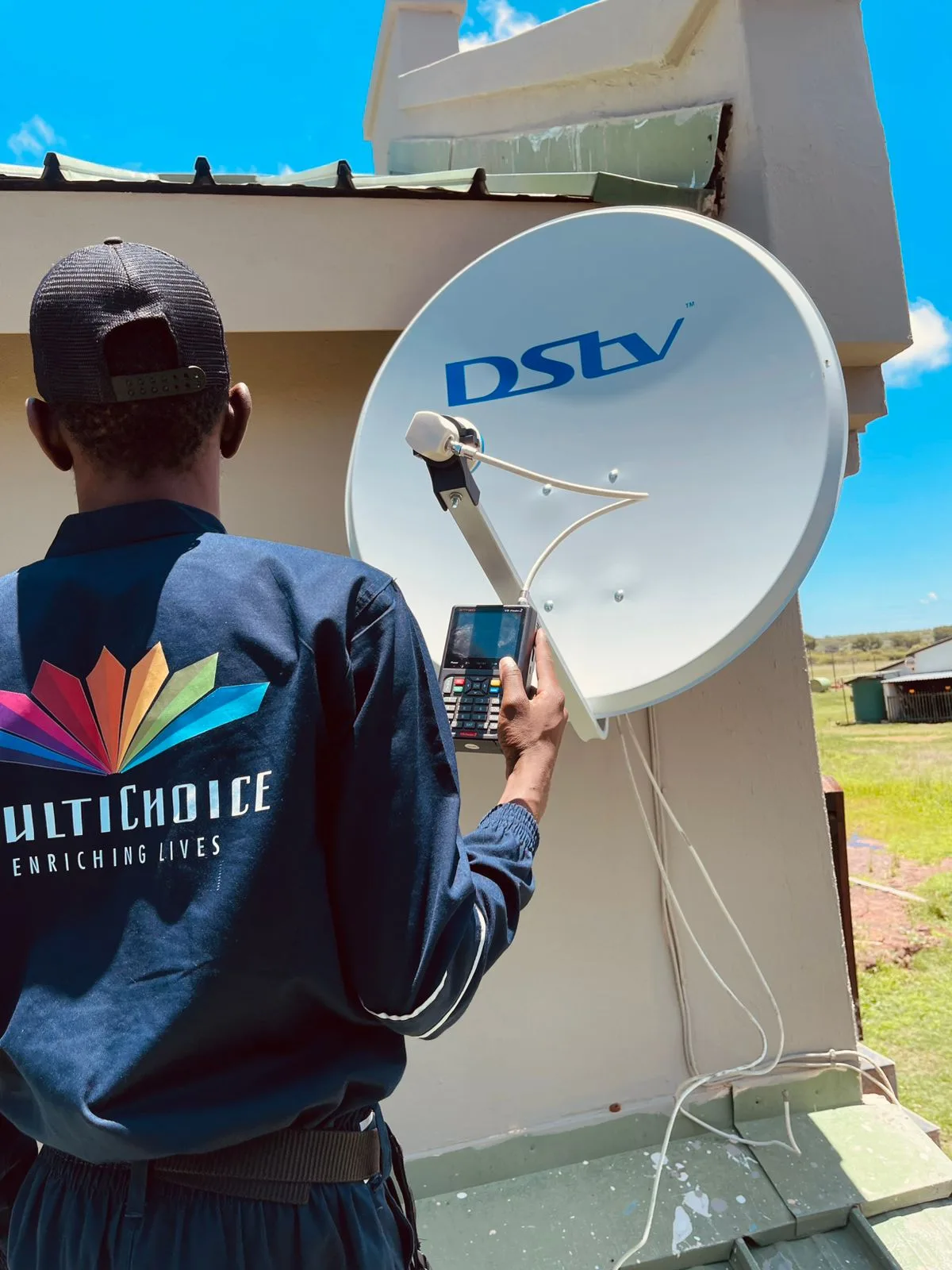
- Professional dstv installers use signal meters to achieve precise alignment rather than relying on the decoder's on-screen bar alone.
- Calling a qualified dstv technician early prevents cumulative damage to cabling and mounting hardware caused by vibration and weather exposure.
Understanding DStv Signal Strength and Signal Quality Metrics
Most DStv decoders display two separate values: signal strength and signal quality. These are not the same measurement, and confusing them is one of the most common errors during self-diagnosis.
Signal strength measures the raw power of the satellite signal arriving at the LNB. Signal quality (also called signal quality ratio or carrier-to-noise ratio) measures how clean and decodable that signal is.
It is entirely possible to have high signal strength and low signal quality. This typically points to interference on the cable run, a faulty LNB, or dish misalignment where the dish is catching edge energy from the satellite beam rather than peak energy.
For stable HD and Ultra HD reception on the Eutelsat 36B satellite (the primary DStv orbital position), you generally need a signal quality reading of at least 55-60% on the decoder's diagnostic screen. DStv signal strength optimization targets both values simultaneously.
DStv Signal Strength Optimization Through Precise Dish Alignment
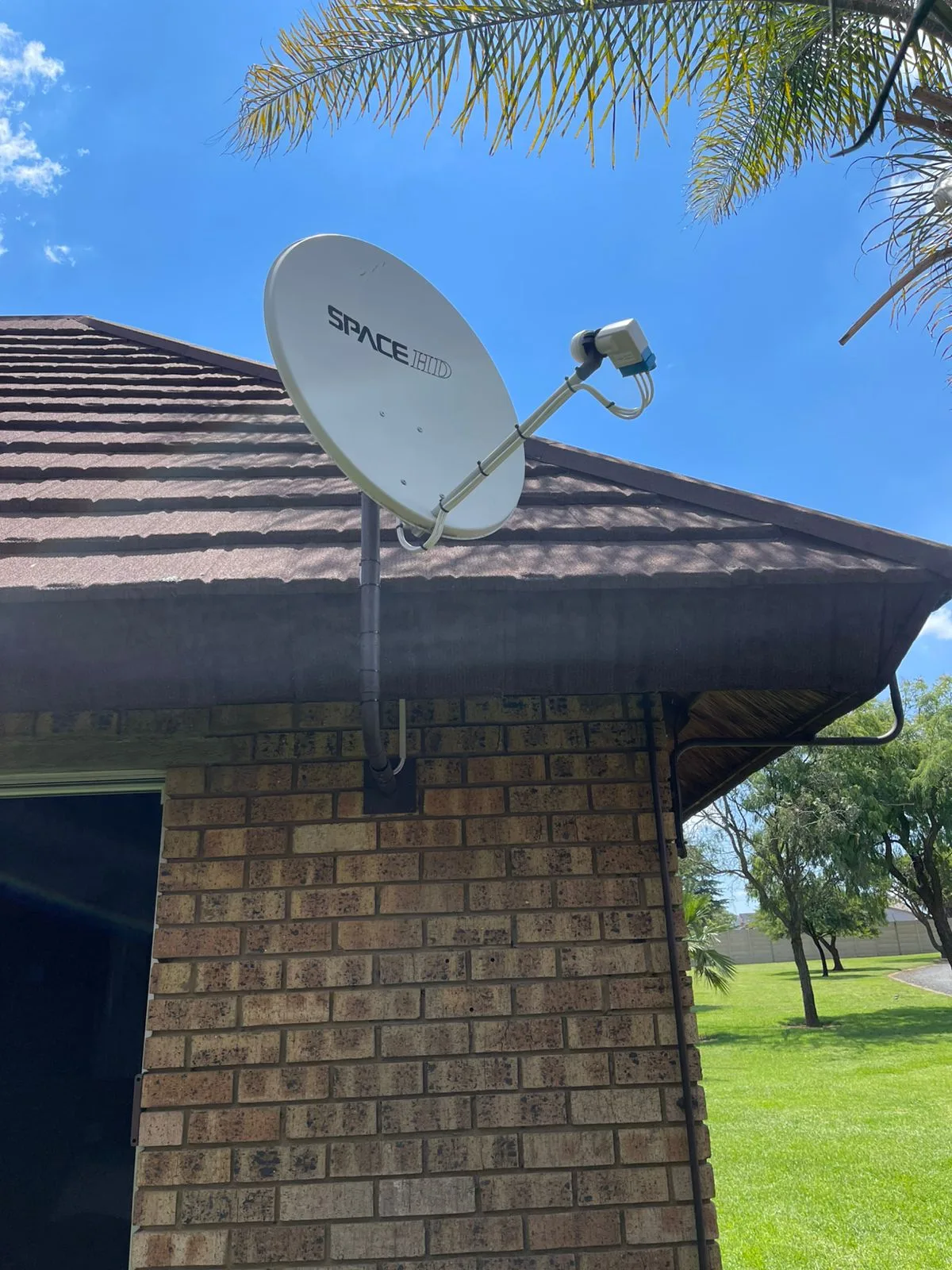
Dish alignment is the core technical task in any dstv signal strength optimization process. The satellite dish must point at a precise azimuth (compass bearing) and elevation (vertical angle) relative to the Eutelsat 36B satellite sitting at 36 degrees East longitude.
In Gauteng, the elevation angle is approximately 52-57 degrees depending on your specific suburb, and the azimuth is roughly 46-52 degrees East. A professional dstv technician uses a calibrated signal meter to fine-tune both axes, not just the decoder's on-screen percentage bar.
Here are the primary alignment variables that affect signal quality:
- Azimuth (horizontal rotation): Even a 0.5-degree error reduces signal quality significantly on large dishes and more severely on compact 60cm units.
- Elevation (vertical tilt): Incorrect elevation is common after storm events when mount bolts loosen.
- LNB skew (feed rotation): The LNB must be rotated to match the satellite's polarization angle at your location. In Gauteng, the recommended skew is approximately -7 to -12 degrees.
- Dish surface integrity: A dented or warped dish reflector scatters the focal point away from the LNB feed, reducing gain across all measurements.
Our dstv installers at DSTV Pro Installers check all four variables on every alignment call. We do not adjust one in isolation because each variable interacts with the others during final peaking.
LNB Selection and Noise Figure for Signal Strength Optimization
The Low-Noise Block downconverter (LNB) converts the high-frequency satellite signal into a range your decoder can process. The technical specification that matters most for DStv signal strength optimization is the LNB noise figure, expressed in decibels (dB).
A lower noise figure means the LNB introduces less electronic noise into the signal chain. This becomes critical during marginal conditions such as light rain or when the dish is at the outer edge of the satellite's coverage footprint.
For standard DStv Explora and single-view decoders, a single universal LNB with a 0.1-0.3 dB noise figure is adequate. For dual-view or PVR setups that require two simultaneous tuner feeds, a twin LNB or multiswitch configuration is required.
We replace outdated 1.0 dB LNBs with modern 0.1-0.3 dB units as a standard upgrade recommendation during any dstv installation call in Gauteng. The improvement in signal quality under poor weather conditions is measurable and consistent.
Cabling Standards and Their Effect on DStv Signal Strength Optimization
The coaxial cable connecting your LNB to your decoder is a signal transmission medium, and its electrical characteristics degrade the signal over distance. For any dstv signal strength optimization effort to be effective, the cabling must meet minimum standards.
Here are the technical cabling requirements for a correctly installed DStv system:
- Cable type: RG6 coaxial cable with 75-ohm impedance is the required standard. RG59 is undersized for digital satellite applications and introduces excessive signal loss.
- Maximum run length: A single RG6 run from LNB to decoder should not exceed 50 meters without a signal amplifier. Beyond that, signal attenuation causes measurable quality degradation.
- F-connector quality: Compression-type F-connectors outperform crimp connectors in water ingress resistance and electrical contact quality. Cheap crimp connectors corrode within 12-18 months in outdoor conditions.
- Cable routing: Cables must be routed away from electrical conduit and AC power cables to prevent induced electromagnetic interference. A minimum separation of 100mm is recommended.
- Cable clips and UV protection: Exposed exterior cable runs must use UV-rated cable clips and, where possible, conduit to prevent solar degradation of the outer jacket.
During every dstv installation we carry out across our 28 Gauteng service suburbs, our technicians inspect the full cable run and document any sections that require replacement or re-routing.
Environmental Obstructions and Weather Effects on Signal Strength
DStv uses Ku-band frequencies (10.7 to 12.75 GHz) for signal transmission. These frequencies are affected by physical obstructions and atmospheric water content in ways that lower-frequency systems are not.
The most common environmental causes of signal degradation that we encounter across Gauteng suburbs include:
- Tree growth: A tree that posed no obstruction at the time of initial dstv installation can grow into the dish's line of sight within 2-3 seasons. Even partial leaf obstruction causes measurable signal loss.
- New structures: Neighbouring buildings, carport extensions, or boundary walls erected after the initial installation can block the satellite path.
- Rain fade: Heavy rainfall absorbs Ku-band energy. This is a normal satellite behaviour, but an optimally aligned and cabled system recovers signal faster when the rain eases compared to a marginal installation.
- Wind-induced dish movement: High winds flex the mounting mast and loosen the elevation and azimuth bolts incrementally. After a windy season in Gauteng, many installations require a minor realignment.
- Bird and animal interference: Birds nesting on or near the dish alter the reflector's focal geometry. We see this regularly in suburban Gauteng areas with high hadeda and pigeon populations.
Our dstv technician team carries a line-of-sight assessment tool to confirm the satellite path is clear before beginning any alignment work.
Decoder Settings and Firmware for Signal Strength Optimization
Hardware is the primary variable in dstv signal strength optimization, but decoder settings and firmware play a supporting role that is often overlooked. An incorrectly configured decoder will misinterpret a valid signal or fail to lock onto it entirely.
Key decoder-level checks that should be part of any signal optimization process include:
- Satellite configuration: Confirm the decoder is set to Eutelsat 36B at 36E. If a previous scan or reset has altered this, the tuner may search on an incorrect orbital position.
- Signal scan: Run a fresh signal scan after any physical adjustment to the dish or LNB. Cached channel data from a prior scan can mask the actual signal state.
- Firmware updates: DStv pushes firmware updates to Explora and other decoders via satellite. Ensure the decoder has been powered and connected long enough to receive pending updates. Outdated firmware can cause tuner inefficiencies.
- LNB settings in menu: Confirm the decoder's LNB type setting matches the physical LNB installed. A wideband LNB requires different menu configuration than a standard universal LNB.
- Decoder reboot cycle: A full decoder power cycle (removing the power cable for 60 seconds, not just standby) clears tuner RAM states that can persist through software resets.
When our dstv installers complete a physical alignment or cable repair, they always verify decoder settings as the final step before confirming the job is complete.
A practical 5-step guide to boosting DStv signal strength. Learn simple optimization tips to reduce dropouts and improve viewing.
DStv Signal Strength Optimization: The Role of Your DStv Technician
A professional dstv technician brings tools and methodology that are fundamentally different from what a homeowner can apply independently. The decoder's built-in signal meter is a relative indicator, not an absolute measurement tool. It shows a percentage derived from the tuner's internal reference, which varies between decoder generations and firmware versions.
Our technicians use professional-grade satellite meters that display true carrier-to-noise ratio (CNR) in dB and transponder-level signal strength in dBm. This allows us to diagnose whether a signal problem originates at the dish, the LNB, the cable, or the decoder, rather than treating all symptoms with the same blanket fix.
The diagnostic workflow our dstv technician team follows on every dstv signal strength optimization call includes:
- Satellite meter reading at the LNB output, before the cable run (baseline measurement).
- Satellite meter reading at the decoder input, after the cable run (identifies cable loss).
- Physical inspection of all F-connectors and inline splitters or diplexers.
- Dish surface inspection for physical damage or contamination.
- LNB continuity and noise figure assessment where meter capability allows.
- Fine peak alignment using meter values, not decoder percentages.
- Final verification of decoder signal diagnostic screen under live conditions.
This structured process means we identify the root cause of the problem rather than replacing hardware speculatively. Call us on 0774544032 to book a diagnostic appointment across any of our 28 Gauteng service suburbs.
Common DStv Signal Errors and What They Mean Technically
DStv decoders produce specific error codes when signal conditions fall below operational thresholds. Understanding these codes helps you describe the problem accurately when contacting our dstv installers.
- E48-32 "No Signal": This error indicates the tuner cannot lock onto a valid carrier frequency. It does not necessarily mean zero signal at the dish. Common causes include LNB power supply failure, disconnected coaxial cable, or complete dish misalignment. A qualified dstv technician needs to perform a meter-based reading to identify which variable is responsible.
- "Searching for Satellite": This persistent state indicates partial signal acquisition. The tuner detects a carrier but cannot maintain lock. This is typically caused by marginal signal levels from a slightly misaligned dish or degraded cable connections. It is often more serious than E48-32 because it suggests the hardware is borderline functional rather than completely failed.
- Pixelation and freeze-frame: These symptoms indicate packet loss in the decoded transport stream. Signal quality (CNR) is below threshold even if signal strength appears acceptable on the decoder screen. This points to LNB noise figure degradation or high cable loss.
- "No card found" combined with signal loss: When a smartcard error appears alongside signal problems, the decoder's power supply may be insufficient, causing multiple subsystems to fail simultaneously.
Maintenance Schedule for Long-Term DStv Signal Strength Optimization
Maintaining stable dstv signal strength optimization over time requires a proactive maintenance approach rather than waiting for complete signal failure. We recommend the following maintenance intervals for residential DStv systems in Gauteng:
Every 12 months:
- Inspect all exterior F-connectors for moisture ingress and corrosion.
- Retighten dish mount bolts to manufacturer torque specification.
- Clear any vegetation that has grown within the satellite line-of-sight path.
- Verify signal quality readings at the decoder diagnostic screen.
Every 24 months:
- Full meter-based alignment verification, even if the decoder shows acceptable readings.
- Inspect cable jacket condition on exterior runs for UV degradation.
- Replace outdoor F-connectors as a precautionary measure if signs of oxidation are present.
Every 5-7 years:
- Assess LNB noise figure performance. LNB degradation is gradual and often not apparent until marginal weather conditions expose the weakness.
- Evaluate dish surface condition and mount integrity, particularly if the installation is exposed to prevailing weather.
A scheduled maintenance visit from our team across any of our 28 Gauteng service areas costs significantly less than an emergency repair after a hardware failure. Contact us at 0774544032 to set up a recurring service agreement.
Professional DStv Installation as the Foundation of Signal Optimization
The most effective form of dstv signal strength optimization is a correctly executed initial dstv installation. Many of the signal problems we diagnose in 2026 trace back to compromises made during the original installation: undersized cable, incorrectly torqued mount bolts, poorly seated F-connectors, or a dish position chosen for convenience rather than for optimum satellite path.
A professional dstv installation by our accredited team includes:
- Site survey to identify the optimal dish position based on satellite azimuth, elevation, and line-of-sight clearance.
- Structural assessment of the mounting surface to ensure long-term stability.
- RG6 cable run with compression F-connectors throughout.
- Meter-based peak alignment to achieve maximum CNR at installation, not just an acceptable decoder bar reading.
- Decoder configuration and signal scan verification before handover.
Our dstv installers operate across 28 Gauteng suburbs and are available for new installations, upgrades, and signal optimization calls. Reach us directly on 0774544032.
Conclusion
Effective dstv signal strength optimization is a multi-variable technical process that covers dish alignment, LNB selection, cable integrity, decoder configuration, and ongoing maintenance. No single fix addresses all signal problems, and each component in the chain contributes to the final signal quality your decoder receives.
At DSTV Pro Installers, we approach every dstv signal strength optimization job with meter-based diagnostics and a structured root-cause methodology. Whether you need a new dstv installation, a precision alignment, an LNB upgrade, or a full cable re-run, our experienced dstv technician team covers 28 Gauteng suburbs with the equipment and expertise to resolve the problem correctly the first time.
Call us now on 0774544032 to book your signal optimization appointment.
Frequently Asked Questions
What is the fastest way to improve DStv signal strength in 2026?
The fastest measurable improvement in DStv signal strength comes from professional dish realignment using a calibrated satellite meter. Realignment directly increases the carrier-to-noise ratio at the decoder, which is the metric that controls picture stability. A dstv technician can typically complete a full alignment in under an hour.
Why does my DStv signal drop during rain but not completely disappear?
Ku-band satellite signals are absorbed by water molecules in heavy rainfall, a phenomenon called rain fade. A system with marginal signal quality (typically below 60% on the decoder screen) drops below the lock threshold during rain while a well-optimized system with quality at 75% or above maintains lock through most rain events. DStv signal strength optimization specifically targets this margin.
How do I know if my LNB needs to be replaced?
Signs of LNB degradation include signal loss on specific transponders while others remain stable, increasing pixelation under light cloud cover, and signal quality that improves briefly after the decoder warms up and then degrades again. A professional dstv technician can confirm LNB health with a meter reading directly at the LNB output before the cable run.
Can I perform DStv signal strength optimization myself without a technician?
Homeowners can perform basic checks: tightening loose cable connections, clearing vegetation from the satellite path, and running a decoder rescan. However, precision dish alignment requires a calibrated signal meter and knowledge of the correct azimuth, elevation, and LNB skew values for your specific Gauteng location. Without a meter, DIY alignment typically results in a marginally improved but not optimized signal position.
What causes the DStv E48-32 error code and how is it fixed?
The E48-32 error indicates the decoder tuner cannot lock onto a signal carrier. The most common causes are LNB power supply failure, a disconnected or corroded coaxial cable, or complete dish misalignment following a storm. Fixing it requires a meter-based diagnostic by a dstv technician to identify whether the fault is at the LNB, the cable run, or the dish position itself.
How long does a DStv dish alignment take and what does it cost in Gauteng in 2026?
A professional dstv signal strength optimization alignment visit from our team typically takes 45 to 90 minutes depending on access to the dish and the complexity of the cable run. Pricing for a standard alignment in our 28 Gauteng service suburbs starts from R500 for labour, with additional costs for hardware replacement if the LNB or connectors require upgrading. Contact us on 0774544032 for a specific quote.
Is it worth upgrading my DStv installation to wideband LNB technology?
Wideband LNB technology supports the newer DStv frequency plan used by Explora Ultra and compatible decoders, and it eliminates the need for a multiswitch in multi-room setups. For households running three or more decoder feeds, a wideband dstv installation reduces hardware complexity and improves overall signal consistency across all tuner ports. Our dstv installers can assess whether your current system supports an upgrade during a standard diagnostic call.
Keep reading
In case you missed it
Planning a job? See same-day decoder swap-out. Or browse our accredited Nigel DSTV installers and accredited Bapsfontein DSTV installers pages.
More to read: our guide: fix dstv no signal.