Why Your DSTV Signal Drops During Joburg Storms (and How to Fix It)
DSTV Pro Installers Team7 min read
If you live anywhere on the Highveld, you know the drill. A proper summer afternoon thundercloud rolls in over Sandton or Centurion, and by the second lightning flash your Explora is flashing E48-32 or the picture has frozen on a Champions League penalty. It is one of the most common complaints we get from homeowners across Gauteng, and the cause is almost never the decoder itself.
Here is what is actually happening, what you can safely check on your own, and when it is time to book a technician to re-align the dish.
The three real reasons storms kill DSTV signal
DSTV uses a geostationary satellite (Intelsat 20) sitting 36,000 km above the equator. The signal travelling down to your dish is already very faint by the time it lands on your roof in Bryanston or Moreleta Park. Highveld storms interfere with that signal in three distinct ways, and knowing which one is happening is half the battle.
1. Rain fade
This is the big one. Heavy rain, especially the dense convective downpours we get between November and March, scatters and absorbs the Ku-band frequency DSTV broadcasts on. If your signal quality sits at 75 percent on a clear day, a really heavy cell can knock it to 30 percent or lower for the duration of the storm. Rain fade is temporary and it clears the moment the storm passes. If signal returns once the rain stops, rain fade was your issue and there is nothing mechanically wrong with your setup.
2. Dish drift from wind
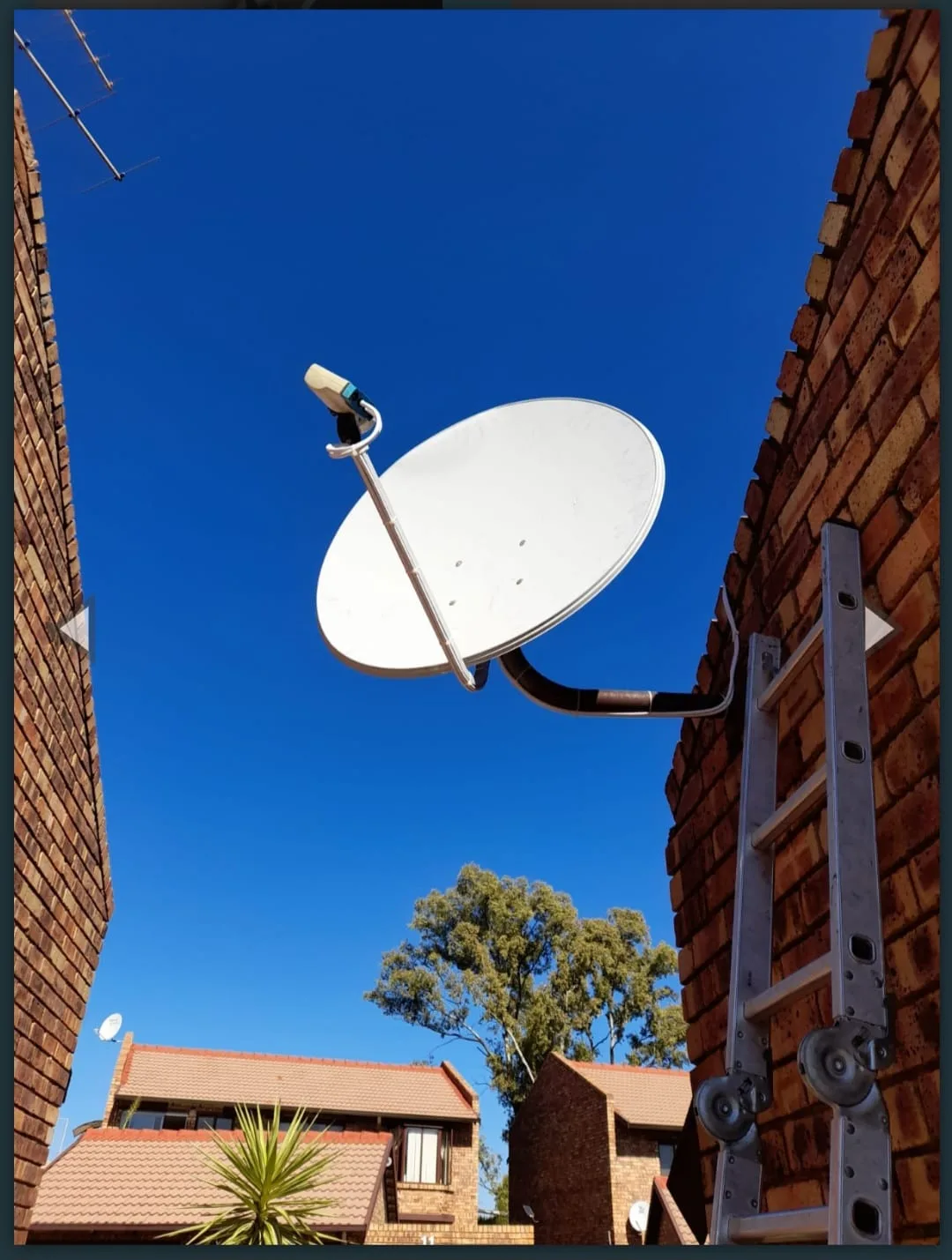
The dish itself is a shallow parabolic reflector and the target window on the satellite is tiny — we are talking fractions of a degree. A proper Highveld gust of 60-80 km/h, especially one that catches a dish mounted on a pole or a less-than-sturdy bracket, can nudge the whole assembly a millimetre or two off-peak. You will not see this with the naked eye, but you will see it on the decoder. Signal quality sits at 45-55 percent even on a blue-sky day and the picture drops every time the neighbour's gate slams.
3. LNB water ingress
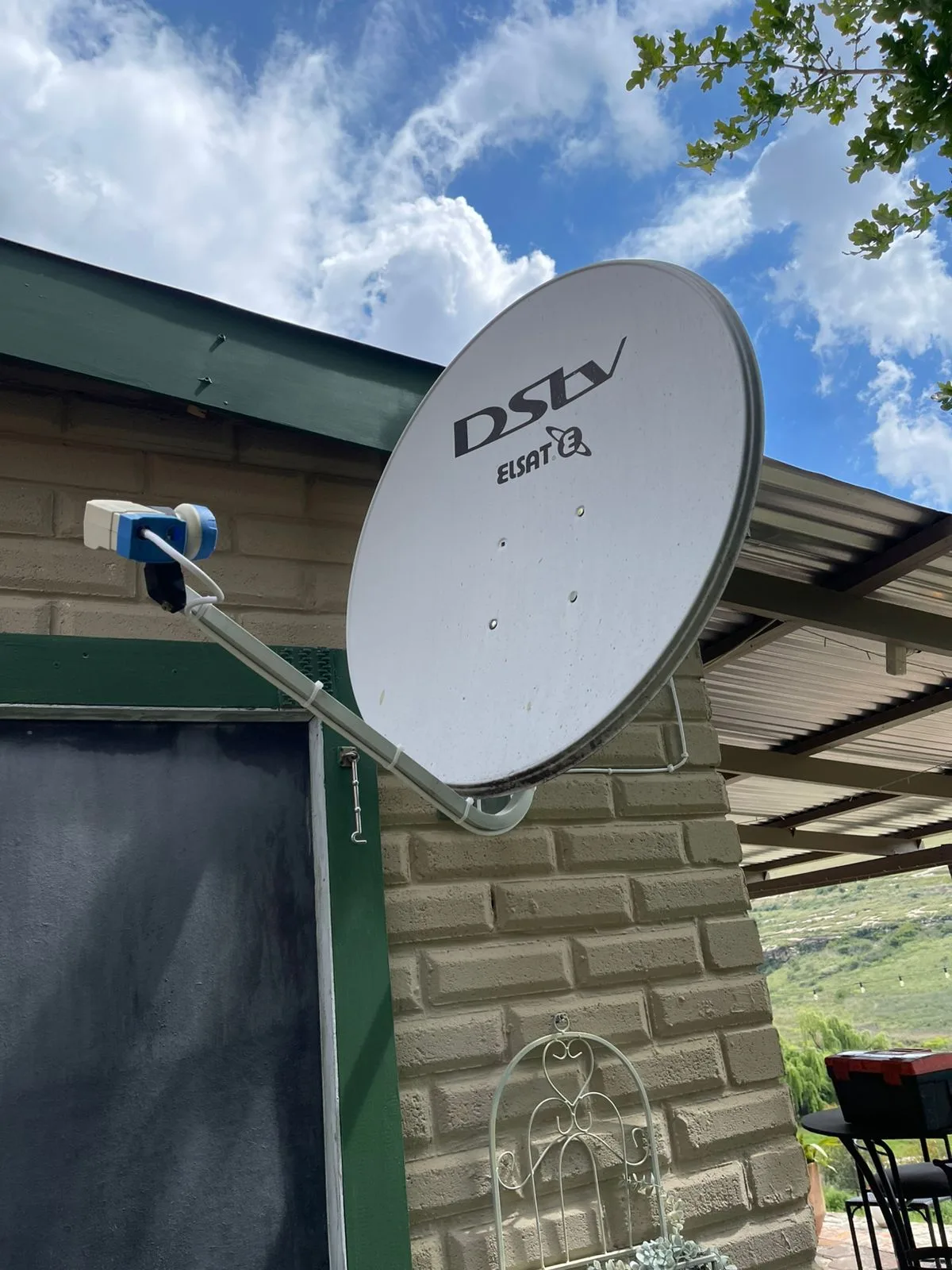
The LNB is the little white horn on the end of the dish arm. It has a rubber seal around the F-connector, and that seal perishes in the Gauteng sun. Once it goes, the first really wet storm drives water into the electronics. Symptoms are specific — the picture freezes only in heavy rain and the signal drops to zero, not a gradual fade. The decoder will usually throw E32 or No signal — check dish.
What you can safely check yourself
Before you phone anyone, spend five minutes doing this — it rules out the simple stuff and it means the technician does not charge you for a call-out that a screwdriver would have solved.
- Press the DSTV button on your remote, then Help, then Signal Information. You want both signal quality and signal strength above 70 percent.
- If both are below 50 percent and the weather is clear, the dish has drifted.
- If signal is fine when dry and only drops in rain, suspect rain fade (fine) or LNB ingress (not fine).
- Look at the dish from ground level. Is it visibly tilted compared to how it used to sit? Has a pigeon built a nest on top of it? You would be amazed.
- Check the cable where it enters the wall. Is the weather boot cracked? Is there visible corrosion on the F-connector? A R40 replacement can solve months of patchy signal.
When to call an installer
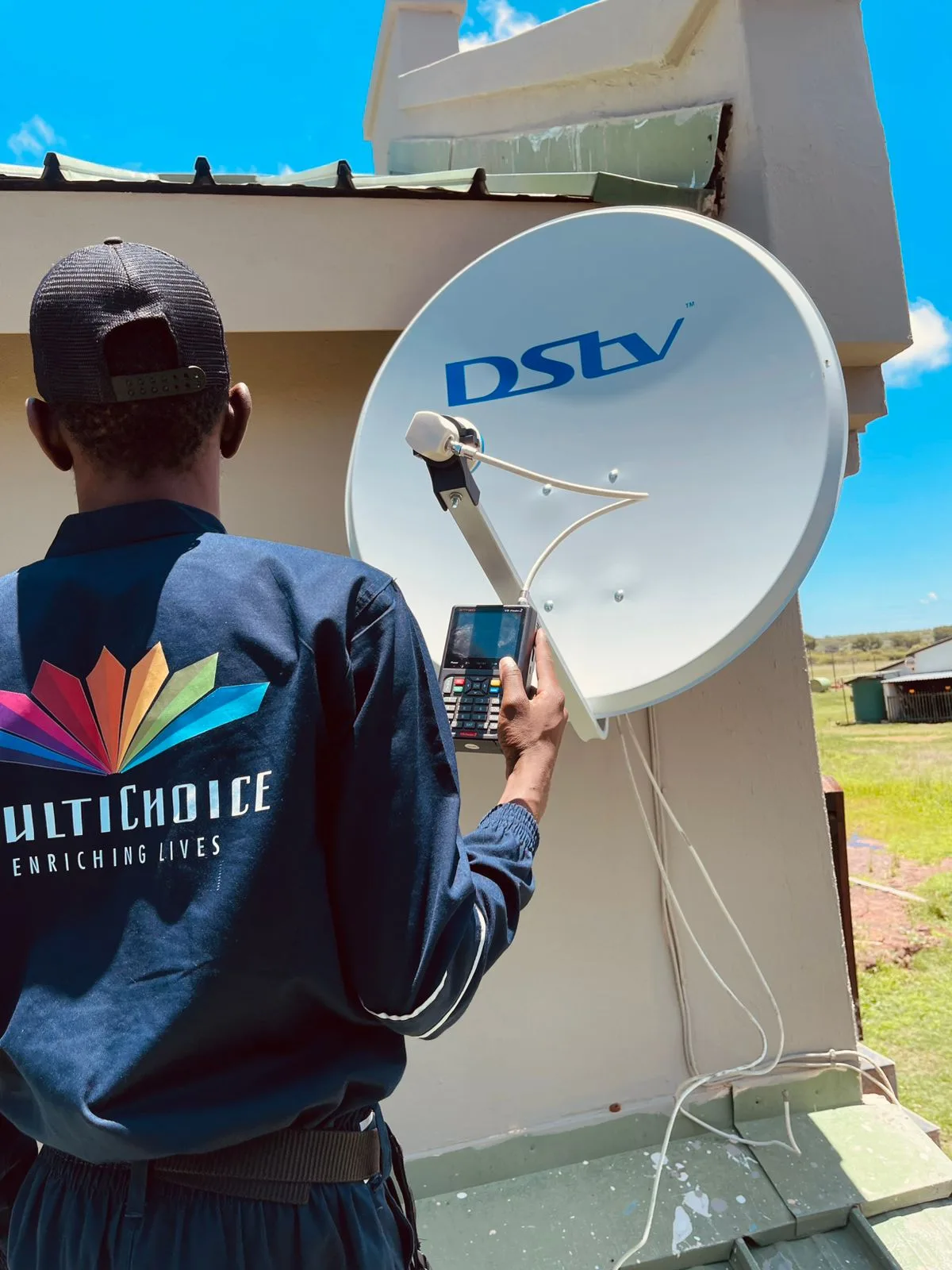
If signal quality is below 70 percent on a dry day, if the dish is visibly tilted, or if you are getting the no-signal error in any rain at all, it is time for a re-alignment. A dish realignment in a Sandton or Centurion home usually takes 30-45 minutes on site. The technician uses a proper signal meter — not the decoder's on-screen reading — to peak the dish on Intelsat 20 to within a tenth of a degree. If the LNB has let water in, we swap it on the spot. Nine times out of ten, one site visit restores signal for the next few storm seasons.
A quick word on preventive work
If your install is more than five years old and you have never had the dish serviced, a preventive re-peak at the start of each summer is cheap insurance. The Gauteng sun hardens cable sheaths and perishes LNB seals faster than any coastal installation, and a 30-minute check is a lot less painful than missing the last over of a Proteas match because the signal died at the worst possible moment.
Need a hand? Book an accredited installer in your suburb
If the signal is still patchy after your own checks, book a proper dish alignment with our team. We cover Sandton, Centurion, Fourways, Bryanston, Pretoria East and 23 other Gauteng suburbs, usually on the same day. Call 077 454 4032 or head to our contact page to book online.